
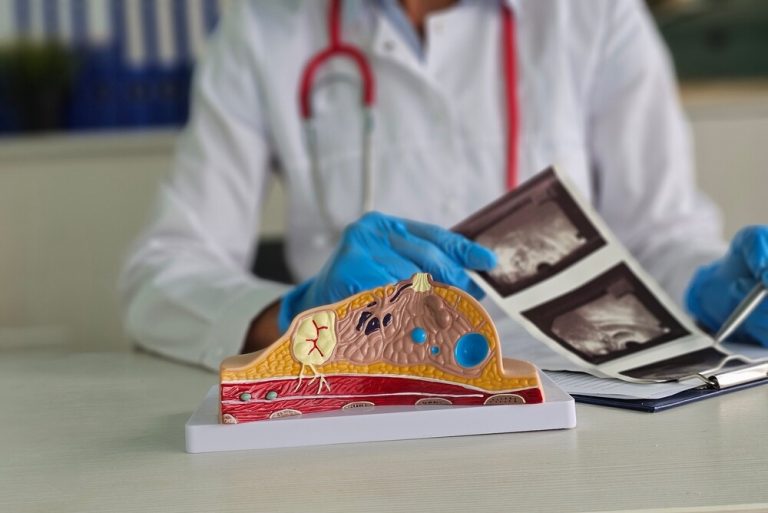
What percentage of breast ultrasounds reveal cancer? A breast ultrasound may be ordered after a lump is felt, a mammogram shows something unusual, or a patient experiences breast pain. While these situations can be stressful, the majority of breast ultrasound results are not cancerous.
Understanding what ultrasound tests are used for, what the results typically reveal, and how to take the next steps, especially if the outcome is concerning, can help patients feel more in control of their health. In this article, we’re going to discuss the percentage of cancer diagnoses that come from breast ultrasounds, explain how the test fits into the broader diagnostic process, and discuss the supportive care options available through Infuze MD.
What Breast Ultrasounds Are Used For
A breast ultrasound is a safe, non-invasive imaging test that uses sound waves to produce pictures of breast tissue. It’s typically used to investigate lumps, evaluate dense breast tissue, or guide a needle during biopsy. Ultrasound helps distinguish between fluid-filled cysts (usually benign) and solid masses (which may require further testing).
Doctors often recommend a breast ultrasound if:
- You or your provider feels a lump during an exam
- A mammogram reveals an area that needs further clarification
- You have pain, swelling, or changes in breast texture
- You have dense breast tissue, which can make mammograms harder to interpret
- You’re undergoing a biopsy, and imaging is needed for accuracy
It’s a quick and helpful step in figuring out what’s happening, but it isn’t meant to provide a final, definitive diagnosis.
What Percentage of Breast Ultrasounds Are Cancerous?
So, what percentage of breast ultrasounds are cancerous? On average, only about 2% to 3% of breast ultrasounds lead to a cancer diagnosis. That means the vast majority—approximately 97%—turn out to be non-cancerous.
Most of the findings identified by ultrasound are benign conditions like cysts or fibroadenomas. Even if a solid mass is found, it doesn’t necessarily mean cancer is present. In most cases, additional testing is required to make that determination. It’s important to remember that ultrasound is a diagnostic aid, not a cancer detector.
Still, if a suspicious result appears, your provider may recommend further steps to investigate.
Diagnostic Steps Beyond Ultrasound
While breast ultrasounds are incredibly useful, they aren’t the only tool in the diagnostic process. If an ultrasound result is unclear or suggests something abnormal, your doctor may order one or more of the following:
- Diagnostic mammogram: Offers a closer, more detailed view of the breast
- MRI: Used in high-risk patients or when more information is needed
- Biopsy: The only way to determine definitively whether a mass is cancerous
- 3D mammography: Helps distinguish overlapping tissues in dense breasts
These tools are often used together to create a more complete picture and help determine the best course of action.
Why Breast Health Awareness Matters
Asking what percentage of breast ultrasounds indicate cancer isn’t just about statistics—it’s about awareness, prevention, and early action. Breast cancer is one of the most common cancers among women, but when caught early, it is often treatable. That’s why imaging tools like ultrasounds, mammograms, and MRIs are so valuable. They help identify changes before symptoms become severe and allow patients to make informed decisions about their care.
It’s important to be your own best advocate when it comes to your health. If something feels off—whether it’s a new lump, breast pain, or skin changes—don’t hesitate to bring it up with your healthcare provider. Routine screening, symptom awareness, and timely testing are essential to catching potential problems early. And while the odds are in your favor (remember, only a small percentage of breast ultrasounds are cancerous), staying informed and proactive gives you the best possible advantage.
What Happens If Cancer Is Found?
Although the chances are low, some people do receive a breast cancer diagnosis following an ultrasound and biopsy. If that happens, there are many options available—not just for treatment, but for comprehensive care that supports your whole body.
Infuze MD offers a wide range of advanced cancer therapies designed to treat the disease while also supporting your body’s strength, resilience, and healing potential. Their programs focus on personalized, integrative care to help patients through every stage of the journey.
Therapies Offered at Infuze MD
If you are diagnosed with breast cancer, Infuze MD delivers cutting-edge therapies tailored to your individual needs, including:
- IV nutrient therapy for cellular support and immune function
- Hyperthermia to weaken cancer cells and support traditional therapies
- Ozone and oxidative treatments to enhance oxygenation and detox
- Targeted supplements and detox protocols to reduce inflammation
- Mind-body and nutritional support for whole-person healing
These therapies complement conventional treatment or serve as a personalized care path for those exploring other options.
Contact Infuze MD Today
What percentage of breast ultrasounds are cancerous? Statistically, only a small number—about 2% to 3%—lead to a cancer diagnosis. Still, an ultrasound is a powerful tool for early detection, clarification, and peace of mind. Most findings are benign, but if further testing is needed, taking action quickly is the best way to protect your health.
And if cancer is detected, you’re not alone. Infuze MD provides access to modern, patient-focused therapies that treat more than just the disease—they support the person experiencing it. If you’ve recently had a breast ultrasound or received a diagnosis, contact Infuze MD today to explore personalized treatment options that go beyond traditional care and support your long-term health.