

Cancer treatment is often complex and highly individualized. While conventional therapies such as surgery, chemotherapy, radiation therapy, immunotherapy, and targeted treatments remain the foundation of cancer care, many patients also seek additional ways to support their health, manage side effects, and improve quality of life throughout their cancer journey.
This is where integrative cancer treatment may play a role.
Integrative cancer treatment combines evidence-informed supportive therapies with conventional oncology care. The goal is not to replace standard cancer treatment, but to help address the physical, emotional, nutritional, and metabolic challenges that patients may experience before, during, and after treatment.
What Is Integrative Cancer Treatment?

Integrative cancer treatment, often called integrative oncology, is a patient-centered approach that combines conventional cancer therapies with complementary therapies designed to support overall health and well-being.
An integrative approach may include:
- Nutritional support
- Intravenous nutrient therapies
- Hyperthermia therapy
- Ozone therapy
- Mind-body medicine
- Stress management
- Exercise programs
- Detoxification support
- Sleep optimization
- Targeted supplementation
- Metabolic health interventions
The purpose is to help patients maintain strength, resilience, and quality of life while working alongside their oncology team.
How Integrative Cancer Care Differs from Alternative Cancer Treatment
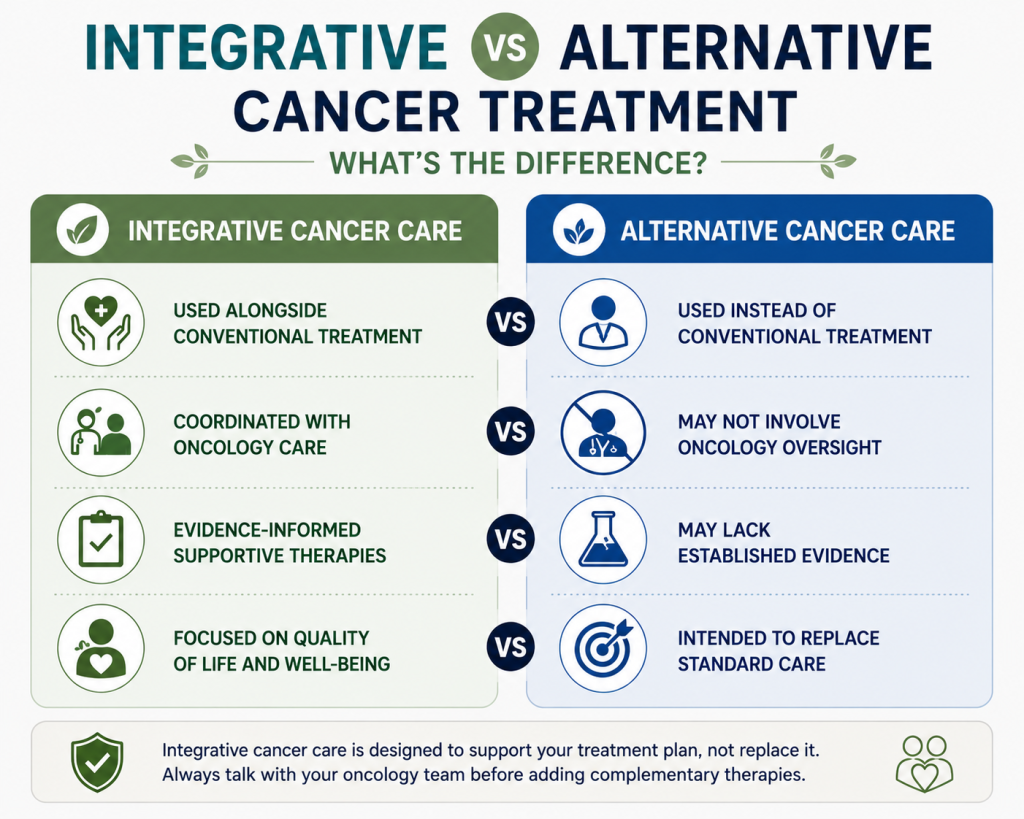
One of the most important distinctions patients should understand is the difference between integrative cancer care and alternative cancer treatment.
Alternative cancer treatments are used instead of conventional therapies such as surgery, chemotherapy, radiation therapy, immunotherapy, or targeted treatments. In contrast, integrative cancer treatment is used alongside conventional medical care.
The goal of integrative cancer care is not to replace standard oncology treatment, but to support the patient through complementary therapies that may help address nutrition, stress, sleep, physical function, and overall quality of life.
Common integrative therapies may include nutrition support, mind-body medicine, exercise programs, IV nutrient therapy, hyperthermia, and other personalized interventions. These therapies are typically incorporated into a care plan that remains coordinated with the patient’s oncology team.
Patients should always discuss complementary therapies with their healthcare providers to help ensure safety, coordination of care, and alignment with their overall treatment goals.
Why Patients Explore Integrative Oncology
Cancer affects far more than a single organ or tumor site. Patients may experience challenges that impact multiple aspects of daily life.
Common concerns include:
- Fatigue
- Poor sleep
- Digestive symptoms
- Appetite changes
- Stress and anxiety
- Nutritional deficiencies
- Reduced physical function
- Inflammation
- Immune system challenges
Integrative oncology programs often focus on helping patients manage these concerns while supporting overall health throughout treatment and recovery.
The Role of Nutrition in Integrative Cancer Treatment
Nutrition is one of the most important pillars of comprehensive cancer support.
Cancer and cancer treatments can significantly affect nutritional status. Patients may struggle with appetite changes, nausea, altered taste, weight loss, or digestive symptoms.
A personalized nutrition plan may help patients:
- Maintain healthy body weight
- Support energy production
- Promote muscle preservation
- Improve recovery
- Address nutrient deficiencies
- Support overall metabolic health
Because every diagnosis and treatment plan is different, nutritional recommendations should be individualized.
IV Nutrient Therapy and Cancer Support
Some integrative oncology programs may include intravenous nutrient therapies as part of a personalized care plan.
IV therapies may be used to help support:
- Hydration
- Nutritional status
- Energy levels
- Recovery support
The specific therapies recommended depend on the patient’s diagnosis, treatment plan, laboratory findings, and overall health status.
Patients should only receive IV therapies under appropriate medical supervision and in coordination with their oncology team.
Hyperthermia Therapy in Integrative Oncology
Hyperthermia therapy uses carefully controlled heat as part of a broader cancer support strategy.
Research continues to investigate how hyperthermia may interact with conventional cancer treatments. In integrative settings, hyperthermia is often explored as part of a comprehensive treatment-support plan.
Potential goals may include:
- Supporting treatment response
- Improving circulation
- Enhancing overall therapeutic strategies
The appropriateness of hyperthermia varies based on cancer type, stage, and individual patient circumstances.
Ozone Therapy and Integrative Cancer Care
Ozone therapy is another supportive modality that some patients explore within integrative medicine settings.
Research in this area is ongoing, and approaches vary between clinics and treatment protocols.
Patients considering ozone therapy should work with experienced medical professionals who understand both integrative medicine and oncology care.
Supporting Immune Function During Cancer Treatment
The immune system plays an important role in overall health during cancer treatment and recovery.
Integrative care plans may focus on:
- Nutritional optimization
- Sleep quality
- Stress reduction
- Physical activity
- Targeted supplementation when appropriate
Supporting immune health does not mean treating cancer directly. Rather, these strategies may help patients maintain overall wellness throughout treatment.
The Importance of Personalized Cancer Care
No two cancer patients are exactly alike.
Factors that influence treatment decisions include:
- Cancer type
- Stage of disease
- Genetics
- Medical history
- Current therapies
- Nutritional status
- Treatment goals
A personalized integrative oncology plan takes these factors into account and is tailored to each patient’s unique situation.
Questions to Ask When Evaluating an Integrative Cancer Treatment Program
Patients considering integrative oncology services may wish to ask:
- How is care coordinated with my oncologist?
- What therapies are evidence-informed?
- How are treatment recommendations personalized?
- What safety protocols are followed?
- How is progress monitored?
- What experience does the medical team have with cancer patients?
These questions can help patients make informed decisions about their care.
Is Integrative Cancer Treatment Right for You?
Many cancer patients seek additional support beyond conventional treatment alone. Integrative cancer care may offer a structured approach to addressing nutrition, lifestyle factors, recovery support, and quality-of-life concerns while remaining coordinated with standard oncology care.
The most effective plans are individualized, medically supervised, and designed to complement a patient’s existing treatment strategy.
If you are exploring integrative cancer treatment, the experienced medical team at Infuze MD can help you better understand which supportive therapies may be appropriate for your specific diagnosis, treatment plan, and health goals.
Key Takeaways
- Integrative cancer treatment combines conventional oncology care with complementary supportive therapies.
- The goal is to support overall health, quality of life, and patient well-being.
- Nutrition, IV therapy, hyperthermia, and lifestyle interventions are common components of integrative oncology programs.
- Integrative care should complement, not replace, conventional cancer treatment.
- Personalized treatment plans are essential because every patient’s situation is unique.
- Coordination with an oncology team is critical for safety and effectiveness.
Sources
- National Cancer Institute (NCI). Nutrition During Cancer Treatment.
https://www.cancer.gov/about-cancer/treatment/side-effects/nutrition - O’Brien K, Ried K, Binjemain T, Sali A. Integrative Approaches to the Treatment of Cancer. Cancers. 2022;14(23):5933.
https://pmc.ncbi.nlm.nih.gov/articles/PMC9740147/ - National Cancer Institute (NCI). Complementary and Alternative Medicine for Cancer.
https://www.cancer.gov/about-cancer/treatment/cam - Society for Integrative Oncology (SIO). About Integrative Oncology.
https://integrativeonc.org - American Society of Clinical Oncology (ASCO). Integrative Medicine and Cancer Care Guidelines.
https://www.asco.org - American Cancer Society. Complementary and Integrative Medicine.
https://www.cancer.org/cancer/managing-cancer/treatment-types/complementary-and-integrative-medicine.html - National Center for Complementary and Integrative Health (NCCIH). Cancer and Complementary Health Approaches.
https://www.nccih.nih.gov/health/cancer-and-complementary-health-approaches