

Cancer treatment often involves a combination of surgery, chemotherapy, radiation therapy, immunotherapy, and other evidence-based medical approaches. Alongside these conventional treatments, many patients explore integrative therapies that may help support overall wellness, symptom management, and quality of life throughout their cancer journey.
One approach frequently discussed in integrative oncology is intravenous (IV) therapy. By delivering nutrients and hydration directly into the bloodstream, IV therapy may offer a supportive option for some patients under the guidance of qualified healthcare professionals.
This article explores what IV therapy is, how it may fit into an integrative cancer care plan, and important considerations for patients seeking personalized support.
What Is IV Therapy?
IV therapy involves administering fluids, vitamins, minerals, amino acids, and other nutrients directly into the bloodstream through a vein. Unlike oral supplements, which must pass through the digestive system, IV delivery bypasses gastrointestinal absorption and allows nutrients to enter circulation immediately.
In integrative medicine settings, IV therapies are often customized based on a patient’s individual needs, treatment history, symptoms, and overall health goals.
For cancer patients, IV therapy is not intended to replace conventional oncology care. Instead, it may be used as part of a broader supportive strategy designed to help maintain nutritional status, hydration, and overall well-being.
Why Cancer Patients May Explore IV Therapy
Cancer and cancer treatments can place significant demands on the body. Some patients experience challenges such as:
- Fatigue
- Poor appetite
- Dehydration
- Nutrient deficiencies
- Digestive difficulties
- Treatment-related stress
- General weakness or reduced energy levels
Integrative practitioners may recommend specific IV formulations as part of a comprehensive care plan aimed at supporting the body’s nutritional and metabolic needs during treatment and recovery.
Because every patient’s situation is unique, the appropriateness of IV therapy should always be evaluated on an individual basis and coordinated with the patient’s oncology team.
Potential Supportive Benefits of IV Therapy in Integrative Cancer Care
Hydration Support
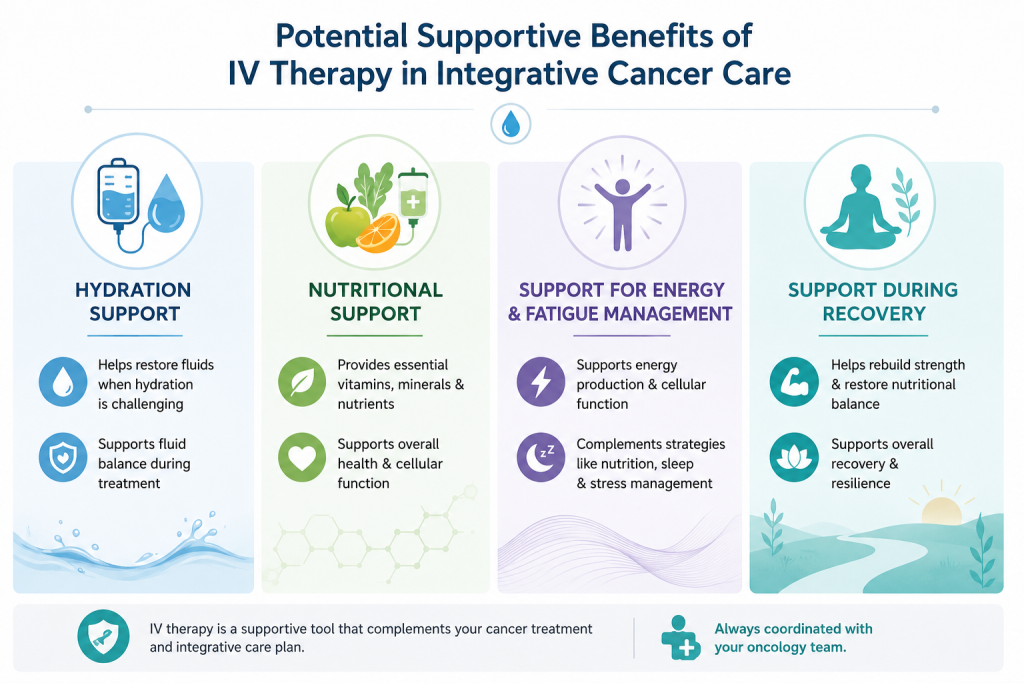
Maintaining adequate hydration can be challenging during cancer treatment, particularly for patients experiencing nausea, vomiting, diarrhea, or decreased fluid intake.
IV hydration may help restore fluids more efficiently than oral intake alone in certain situations and can be an important supportive tool when hydration needs are elevated.
Nutritional Support
Cancer treatments can sometimes affect appetite, digestion, and nutrient absorption. As a result, some patients may struggle to maintain optimal nutritional status.
Certain IV therapies may provide vitamins, minerals, and other nutrients that support overall health and physiological function. Nutritional support is often considered an important component of integrative cancer care.
Support for Energy and Fatigue Management
Cancer-related fatigue is one of the most commonly reported symptoms among patients undergoing treatment.
While no IV therapy can eliminate cancer-related fatigue entirely, some nutrient-based protocols are often used in integrative settings to support cellular function, energy metabolism, and overall vitality. Patients may explore these options as part of a broader strategy that includes nutrition, sleep optimization, physical activity, and stress management.
Support During Recovery
Recovery after cancer treatment can involve rebuilding strength, restoring nutritional balance, and addressing lingering symptoms.
Integrative care plans may incorporate IV therapy alongside dietary counseling, exercise programs, mind-body medicine, and other supportive interventions designed to promote overall recovery and resilience.
High-Dose Vitamin C and Integrative Oncology
One of the most frequently discussed IV therapies in integrative oncology is intravenous vitamin C.
Unlike oral vitamin C supplementation, IV administration can achieve significantly higher blood concentrations. Researchers have investigated intravenous vitamin C for its potential role in supportive cancer care, symptom management, and quality-of-life outcomes.
Current research remains ongoing, and intravenous vitamin C is not considered a standalone cancer treatment. However, some integrative oncology programs incorporate it as part of individualized supportive care plans under medical supervision.
Patients interested in IV vitamin C should discuss potential benefits, risks, and eligibility with qualified healthcare providers who are familiar with both integrative medicine and oncology care.
The Importance of Personalized Treatment Planning
Not every IV therapy is appropriate for every cancer patient.
Factors that may influence treatment recommendations include:
- Cancer type and stage
- Current cancer treatments
- Kidney function
- Nutritional status
- Medical history
- Medication use
- Laboratory findings
- Overall health goals
A personalized assessment helps determine whether IV therapy may be appropriate and which nutrients or formulations align best with a patient’s individual needs.
Safety Considerations
Integrative therapies should always complement, not replace, conventional cancer treatment.
Patients considering IV therapy should seek care from experienced medical professionals who understand both integrative medicine and oncology. Proper screening, laboratory evaluation, and ongoing monitoring are important components of safe and effective care.
Open communication between patients, integrative providers, and oncology teams helps ensure that all therapies work together as part of a coordinated treatment plan.
When to Consider an Integrative Oncology Consultation
Patients may benefit from an integrative oncology consultation if they are interested in:
- Supportive therapies during treatment
- Nutritional optimization
- Managing treatment-related fatigue
- Hydration support
- Wellness strategies during recovery
- Developing a comprehensive, personalized care plan
At Infuze MD, our team takes a personalized approach to integrative cancer support. We work closely with patients to evaluate their health history, treatment goals, nutritional needs, and overall wellness concerns. Through individualized treatment plans that may include IV nutrient therapy, lifestyle recommendations, and other evidence-informed supportive therapies, we help patients explore options that complement their existing oncology care.
The goal of integrative oncology is not to replace conventional cancer treatment, but to support the whole person throughout treatment, recovery, and long-term wellness. Patients interested in learning whether IV therapy or other integrative services may be appropriate for their situation can schedule a consultation with the Infuze MD team to discuss their unique needs and goals.
Key Takeaways
- IV therapy delivers fluids and nutrients directly into the bloodstream.
- It may be used as a supportive component of integrative cancer care.
- Potential applications include hydration support, nutritional support, and recovery support.
- High-dose intravenous vitamin C is one of the most commonly discussed therapies in integrative oncology.
- IV therapy is not a substitute for conventional cancer treatment.
- Personalized assessment and coordination with an oncology team are important for safety and effectiveness.
- Integrative cancer care focuses on supporting the whole person throughout treatment and recovery.
Sources
- National Cancer Institute. Intravenous Vitamin C (PDQ®)–Patient Version. Available at: https://www.cancer.gov/about-cancer/treatment/cam/patient/vitamin-c-pdq
- National Cancer Institute (NCI). Complementary and Alternative Medicine in Cancer Care. Available at: https://www.cancer.gov
- National Center for Complementary and Integrative Health (NCCIH). Cancer and Complementary Health Approaches. Available at: https://www.nccih.nih.gov
- Society for Integrative Oncology. Clinical Practice Guidelines for Integrative Oncology.
- American Cancer Society. Complementary and Integrative Medicine. Available at: https://www.cancer.org
- Conte E, Rizzolo E, Flower G, Legacy M, Seely D. Intravenous Vitamin C in Cancer Care: Evidence Review and Practical Guidance for Integrative Oncology Practitioners. Canadian Association of Naturopathic Doctors Journal. 2024. Available at: https://candjournal.ca/index.php/candj/article/view/149
- Canadian College of Naturopathic Medicine. Intravenous Vitamin C in Cancer Care: Evidence Review and Practical Guidance for Integrative Oncology Practitioners (Research Abstract). Available at: https://ccnm.edu/research-abstracts/intravenous-vitamin-c-cancer-care-evidence-review-and-practical-guidance


